Best Practice
Performance

Why Optimizing a Local Landing Page Has Most Impact on Local Search Results

Why Optimizing a Local Landing Page Has Most Impact on Local Search Results

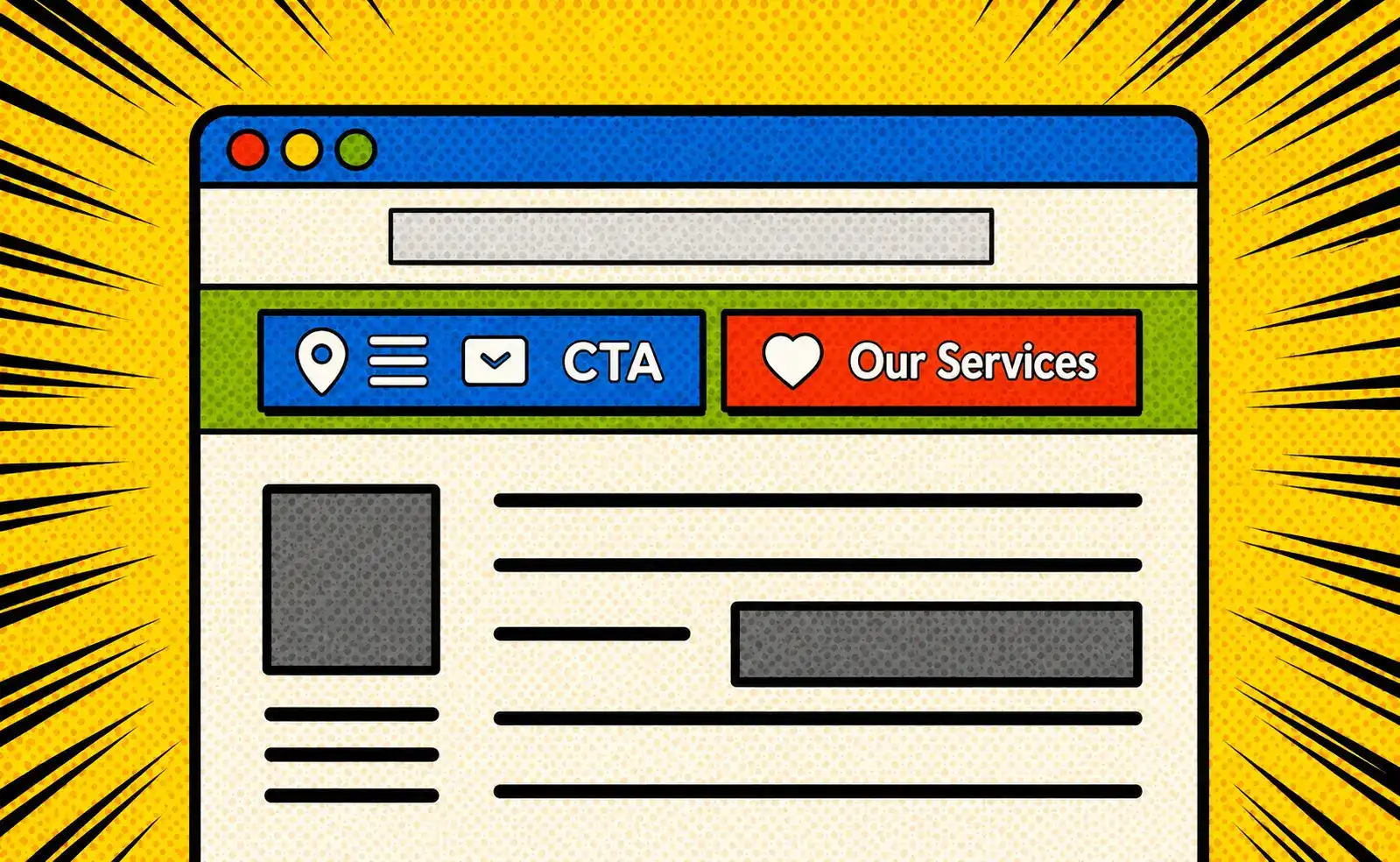
When businesses think about search engine optimization, they often focus on improving the performance of their entire website. While overall website optimization is important, modern search behavior shows that customers rarely start their journey on a homepage. Instead, they land directly on a specific page that matches their search query.

In other words, customers don’t click into websites—they click into individual landing pages that best answer their question.

For businesses that rely on local customers, this means that optimizing local landing pages is often far more important than optimizing the website as a whole. Understanding the difference between website-level optimization and landing page optimization can significantly improve search visibility, user engagement, and conversion rates.

Website Optimization vs Landing Page Optimization

Traditional SEO strategies often focus on improving the authority and performance of an entire website. This includes factors such as:

  • domain authority
  • site-wide technical performance
  • internal linking structure
  • overall content strategy

While these signals still matter, search engines increasingly evaluate individual pages when determining which results to display for a specific query.

A customer searching for “dentist in St Charles” is not looking for a generic dental website. They are looking for a specific dentist in a specific location.

Search engines respond to this intent by prioritizing pages that clearly match the query—usually location-specific landing pages rather than generic homepage content.

How Search Engines Match Queries to Landing Pages

Modern search engines evaluate whether a page directly answers the user’s intent.

When someone searches for a service in a specific location, search engines look for pages that include:

  • clear service descriptions
  • geographic relevance
  • structured business information
  • helpful content related to the query

Pages that provide this information are more likely to appear in search results because they are more relevant to the user’s needs.

This is why businesses that create dedicated location landing pages often outperform those that rely only on a homepage or general service pages.

The SEO Dashboard helps businesses evaluate whether their landing pages contain the signals that influence local search visibility.

Why Local Landing Pages Drive More Traffic

Local landing pages perform better in search because they align closely with how people search for services.

For example, customers often search using queries such as:

  • “oil change near me”
  • “dentist in Chicago”
  • “brake repair St Charles”

Search engines try to match these queries with pages that clearly describe:

  • the service offered
  • the location served
  • the business providing the service

A well-optimized landing page that includes this information is much more likely to appear in search results than a generic homepage.

Landing Pages Provide Better Answers for AI Search

Another reason landing pages are increasingly important is the rise of AI-powered search systems.

AI search engines often interpret content and generate answers rather than simply listing websites.

To produce accurate responses, AI systems look for pages that contain:

  • clear entity signals
  • structured data
  • detailed service information
  • answers to common customer questions

Landing pages designed around a specific service and location naturally provide these signals.

The AI Readiness Dashboard helps businesses evaluate whether their pages provide the structured and conversational content needed for AI search visibility.

Key Elements of an Effective Local Landing Page

Businesses that want their landing pages to perform well in search should focus on several important elements.

  1. Clear Service and Location Information
    • The page should clearly explain the services offered and the geographic area served.
  2. LocalBusiness Structured Data
    • Structured data helps search engines and AI systems interpret business information more accurately.
  3. Helpful Content for Customers
    • Landing pages should answer the questions customers commonly ask when searching for services.
  4. Trust Signals
    • Reviews, testimonials, and reputation indicators help reinforce credibility.
  5. Strong Page Structure
    • Clear headings and well-organized content improve readability for both users and search engines.

Modfyr's competitive solutions can help identify whether competitor pages include stronger signals in these areas.

Why Website-Level Optimization Still Matters

Although landing pages play a major role in search visibility, website-level optimization remains important.

Strong websites typically provide:

  • a clear internal linking structure
  • consistent branding and messaging
  • technical accessibility for search engines
  • supporting content that reinforces topical authority

Together, these elements strengthen the credibility of individual landing pages.

However, the pages that ultimately appear in search results—and receive traffic—are usually specific landing pages that match user intent.

Optimizing Landing Pages for Modern Search

Businesses that rely on local discovery should prioritize the optimization of location landing pages rather than focusing only on homepage optimization.

  • Effective landing pages should:
  • clearly describe services offered
  • reference the geographic location served
  • implement LocalBusiness structured data
  • answer common customer questions
  • provide trust and credibility signals

Using Modfyr's local search solutions, businesses can analyze their landing pages the local search visibility tool, evaluate machine-readability through Modfyr's AI readiness tools, and compare performance against competitors with the competitive benchmarking and analysis tools.

Final Thoughts

Search behavior has evolved. Instead of browsing entire websites, customers increasingly land directly on the pages that best match their search queries.

Businesses that optimize specific landing pages for local intent are far more likely to appear in search results and attract qualified traffic.

By focusing on the pages that customers actually land on—and ensuring those pages provide clear, helpful, and structured information—businesses can significantly improve both local SEO performance and AI search visibility.

Ready to unlock local growth for your business?

Start for Free

Start your free trial today—no credit card required.

Frequently Asked Questions

What is Local GEO?

Local GEO (Generative Engine Optimization) is the practice of optimizing a local business page so AI systems—like ChatGPT, Google SGE, and other generative search platforms—can confidently retrieve, understand, and cite it as a trusted answer source.

While traditional SEO focuses on ranking in search engine results pages (SERPs), Local GEO focuses on:


  • -


      Conversational intent coverage
  • -
      Entity clarity (clear LocalBusiness identity)
  • -
      Structured data completeness
  • -
      Trust and corroboration signals
  • -
      GEO/AEO alignment

Modfyr measures Local GEO through AI Readiness, AI Confidence, and Query Match Coverage scores.

How is Local GEO different from traditional SEO?

Traditional SEO optimizes pages to rank in search engine listings.

Local GEO optimizes pages to be selected, summarized, and cited inside AI-generated answers.

Traditional SEO

Local GEO SEO

Optimizes for rankings

Optimizes for answer selection

Focuses on keywords

Focuses on intent coverage

SERP visibility

AI answer visibility

Click-through rate

Extractability & citation likelihood

A page can rank well in Google but still perform poorly in AI search if it lacks:


  • -


      Structured LocalBusiness schema
  • -
      Clear conversational coverage
  • -
      Structured data completeness
  • -
      Entity consistency
  • -
      Trust modules (reviews, FAQs, proof)

Modfyr audits both — ensuring strong traditional SEO foundations and AI search readiness.

What are AI Readiness & Confidence Scores?

Modfyr’s GEO Scorecard produces two distinct AI-focused metrics:

AI Readiness (0–100)
Measures how prepared your page is to be used as a source in AI-generated answers.It evaluates:


  • -


      Structured data quality & completeness
  • -
      Conversational coverage
  • -
      Entity clarity
  • -
      Content extractability

AI Confidence (0–100)
Measures how confidently an AI system can trust and cite your page.It evaluates:


  • -


      Entity corroboration
  • -
      Trust signals
  • -
      Transparency and policy modules
  • -
      Consistency across signals

Together, these scores indicate how likely your page is to be surfaced and referenced in AI-driven search results.

What is Query Match Coverage?

Query Match Coverage measures how well your page answers the types of questions real customers ask.

It analyzes:


  • -


      Covered intents (pricing, product or service details, scheduling, service area)
  • -
      Uncovered intents (missing answer opportunities)
  • -
      Evidence strength per intent

A high coverage score means your page is aligned with:


  • -


      High-intent local search behavior
  • -
      Conversational AI prompts
  • -
      
       Multi-step question flows

This metric bridges SEO and GEO by aligning content with real-world local search intent.

How is Modfyr different from other SEO & GEO tools?

Most SEO tools focus on keywords, backlinks, and technical audits.

Modfyr is different because it:


  • -


      Focuses specifically on local landing pages
  • -
      Combines SEO + GEO in one unified scorecard
  • -
      Measures AI Readiness and AI Confidence

  • -
      Audits structured data for LocalBusiness completeness
  • -
      Evaluates conversational intent coverage
  • -
      Provides prioritized recommendations based on impact

A high coverage score means your page is aligned with:


  • -


      Discoverable
  • -
      Understandable
  • -
      
      Trustworthy
  • -
      
      Extractable by AI systems

It is built for the next era of search, where visibility depends on both rankings and answer engine inclusion.

Does Modfyr only work for location landing pages?

Modfyr's local search solutions are built to help businesses analyze and address key factors impacting local search.

These are factors are specific to a website’s most local-level landing page(s), as they are the pages that offer the most local-level value in search results.


  • -


      For single-location businesses it may be the homepage.
  • -
      For multi-location businesses it's typically individual pages per location.
  • -
      Best Practice: It is the url linked to a location’s Google business listing

Although you may see results for non-location pages, the results may be incomplete due to the submitted page missing local factors that are likely unnecessary or irrelevant for that non-local page to include.

Still have questions? Please reach out to us at contact@modfyr.com and we'll get back you asap!